

Article 1: Water Rights in Montana – A Practitioners Perspective
Executive Summary
The provision of potable water supply to Montana communities is a fundamental role for Civil Engineers. Having practiced civil engineering in Montana for over 30 years, I have seen the evolution of water rights as a fundamentally important consideration in the provision of drinking water to homes in Montana.
Most recently, lawsuits and court cases over the Exempt Well provisions in Montana statute have affected the administration of ground water rights in Montana. This has and will dramatically affect the planning, design, and construction of rural subdivisions in closed basins in Montana. These rural subdivisions often rely on an exempt well for each saleable parcel. The court cases and the apparent contradictions in state statute create significant legal, professional, and ethical dilemmas for Professional Civil Engineers. I explore those issues in detail.
In this series of six articles, I explore this issue in detail and share my insights as a civil engineering practitioner to consider in resolving the complex issues dealing with land ownership and water rights in Montana. I invite questions, feedback and constructive dialog.
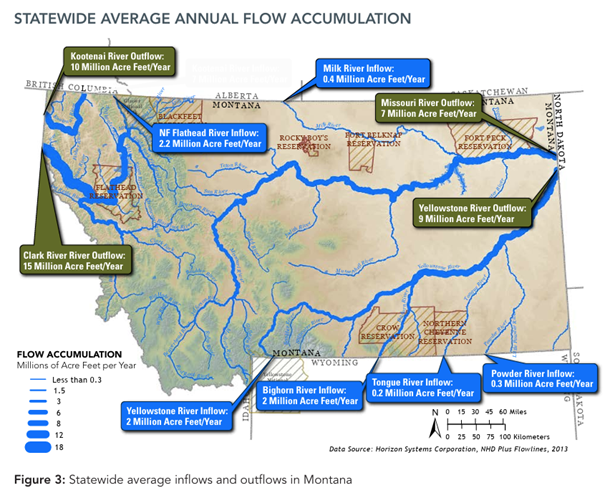
Source: Montana State Water Plan 2015
Why Water Rights Matter
As the saying goes in Montana, “Whiskey is for drinking, water is for fighting.” Stealing water and fighting over it as an age-old problem in the state. Even today, it is not uncommon for the Ditch Rider to find the headgate locks shot off and irrigation diversions opened back up. This is after in draught years, the senior water rights holder made call on the water and had to shut off the fields of junior water rights holders, their neighbors.
The fight continues with the recent filing of lawsuit by the Montana League of Cities and Towns and an unusual collection of agricultural interests and environmental groups against the State of Montana over enforcement of the Exempt Well provisions in State Law. Having the right to own a piece of land and dig a well is a long-held ownership principle in Montana, codified in the statute. The Legislature has long preserved this provision and did so again in the most recent Legislature.
The provision has led to abuses of the exemption and have contributed significantly to sprawling rural land use in the state. In a recent court ruling, Waterkeeper v. Broadwater County, the judge was particularly critical of the Montana Department of Natural Resources and Conservation (DNRC) in their application of existing statutes on a subdivision known as Horse Creek Hills near Canyon Ferry Reservoir east of Helena.
At a recent presentation at the Montana Water Law Conference in Helena, the DNRC revealed that they have sent out 5,200 letters to developers and consultants on water rights issues because of the ruling on Horse Creek Hills. The issue apparently exists in twelve subdivisions across the state and the DNRC is now meeting with the residents of those subdivisions. This undoubtedly affects the value and salability of the property in these developments as the issue is sorted out by DNRC. I characterize this as a cloud on title for those properties.
The provision of water supply is the professional responsibility of the engineers who are planning, designing, and overseeing the construction of these subdivisions. The engineers met the requirements of DNRC and DEQ in obtaining approval of these subdivisions, or they would not have been approved by the local elected officials. This issue exposes these engineers and surveyors to potential professional liability claims even though they met the requirements of the regulatory agencies.
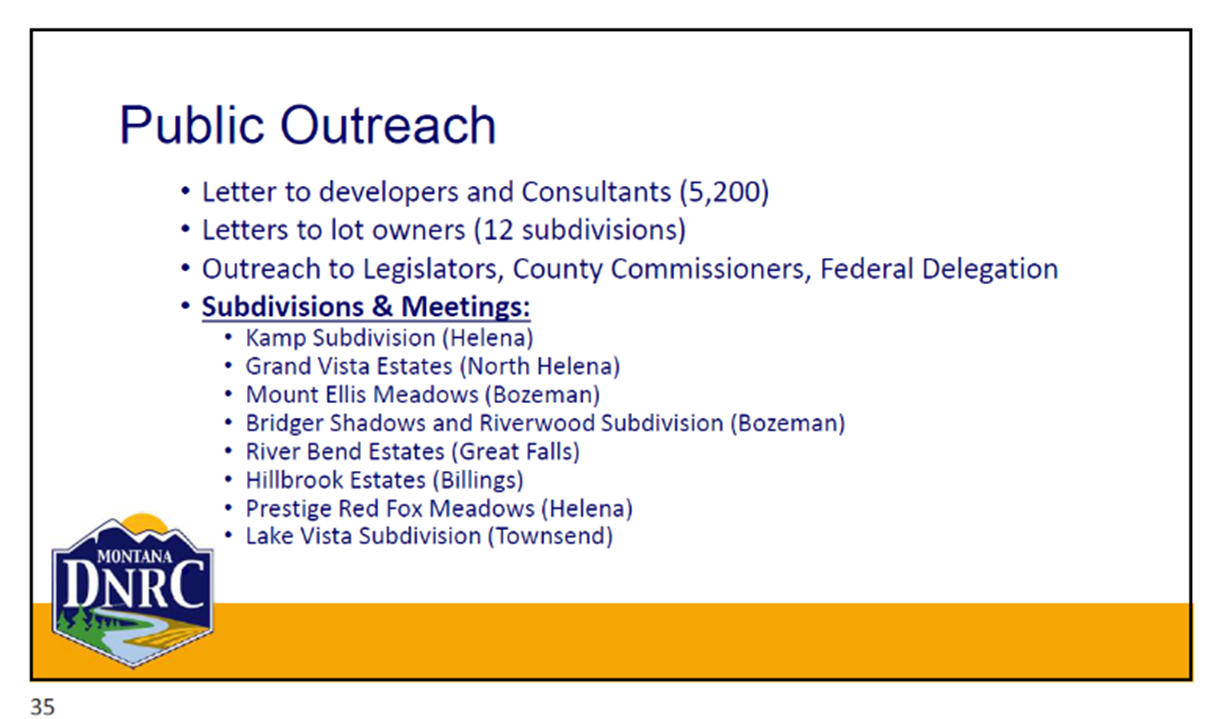
Source: DNRC Presentation 2025 Montana Water Law Conference
Key Terms & Concepts
Water rights in the west are based on seniority of beneficial use, known as prior appropriation doctrine or more simply “first in time, first in right.” Montana water rights fall into several categories:
· Filed Rights
· Decreed Rights
· Permit-based Rights
· Exempt Rights (like small wells and stock ponds)
· Tribal Water Compact Rights
All rights are governed under the prior appropriation doctrine. Montana law and water quality standards recognize a broad set of beneficial use categories including:
· Agricultural,
· Domestic,
· Industrial,
· Commercial,
· Mining,
· Power Generation,
· Fisheries,
· Recreation,
· Instream Flow for Habitat Protection·
Agricultural and mining users are often among the most senior water rights in many basins. Early farmers and miners in Montana started diverting water for their beneficial use in the middle of the 19th century. People had to drink clean water also, so there has always been a senior domestic use of water from native peoples to later settlers.
The process of documenting seniority involves a complex analysis of historic records and archaeological evidence to determine water diversion for beneficial use. Seniority is critically important to farmers and ranchers. If a senior water rights holder downstream needs water for their beneficial use, junior water users upstream cannot impede on the full supply of water to the downstream senior user. Enforcement of this seniority system results in a complex mixture of hydrology, hydraulics, geology, archeology, history, statutes, and administrative rules to plan and design for the use of clean water. This is a primary responsibility of Civil Engineers. When we don’t have professional expertise in one of these areas, we seek experts to provide sound analysis and guidance.
The waters in Montana are owned by the State of Montana and permitted for use to individuals and municipalities through a water use permit process administered by the Montana Department of Natural Resources and Conservation (DNRC). For the purposes of my articles, references to “water rights” refers to this water use permit as a land entitlement and asset, referred to a usufructuary right.
Real property rights (like land ownership) give you title and control of the land. A usufructuary right is a legal category of property right where the holder has the right to use and enjoy a resource, but not to own it outright. In Montana (and most western states), water itself is owned by the state for the benefit of the public. Individuals or entities don’t own the water; they own the right to use it for a beneficial purpose, subject to priority and regulation. This distinction is central to the prior appropriation doctrine.
Because there are more water rights claims in Montana than there is water, the State formed the Montana Water Court to adjudicate(resolve) the water rights in each basin. This has been a decades long process that continues today.
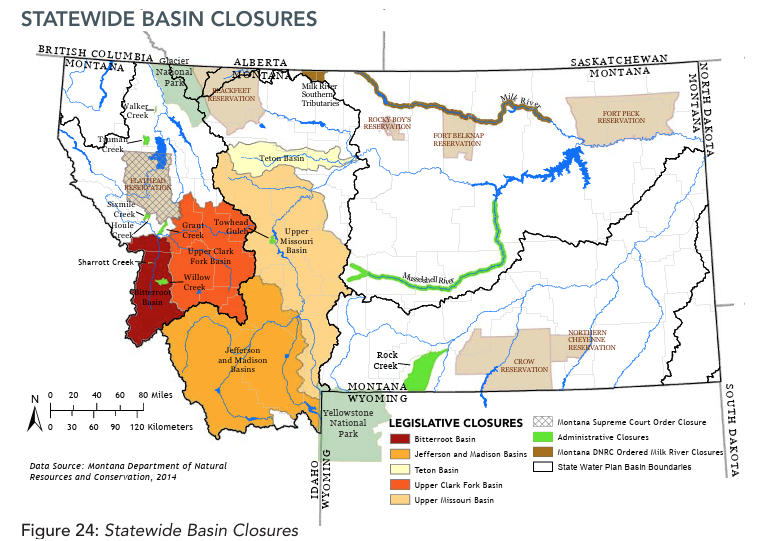
Source: Montana State Water Plan 2015
Historical Context
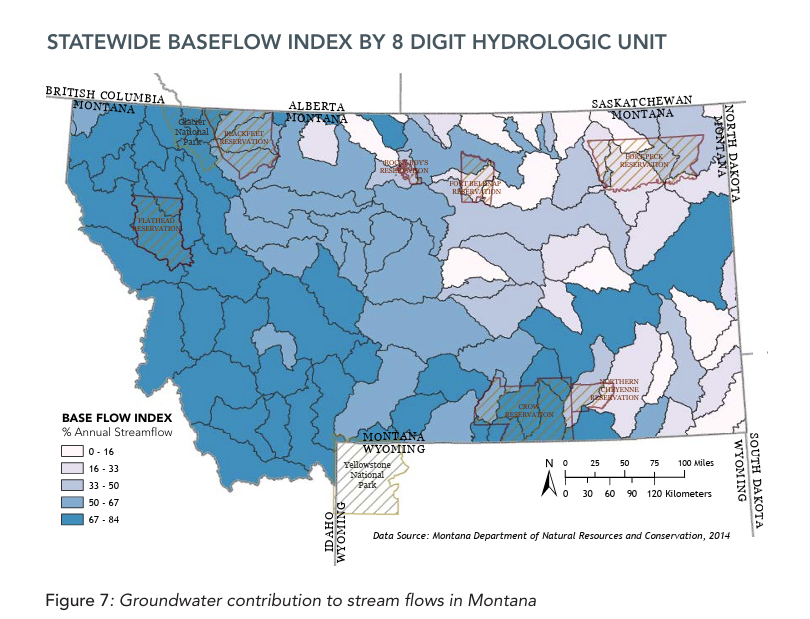
In my thirty years of experience as a civil engineer, water rights became a significant issue in land planning and engineering design in Montana in the 1990’s when the State of Montana started closing river basins to new surface water appropriations. Many basins had been over appropriated in that more surface water rights had been given out than water existed in those basins. The Clark Fork and Bitterroot River basins were two of the basins that closed. This was our first sign that water rights were an important consideration in our planning and engineering work. The Supreme Court ruling in the Smith River Court case in 2008 (Trout Unlimited v. State of Montana) was the real turning point for our planning work. This important court ruling connected surface and ground water in the hallowed Smith River basin. A rancher had installed pivot irrigation equipment near the upper Smith River. The court ruled that the withdraw of groundwater from the pivots was affecting senior surface water rights downstream. The pivots were dewatering the Smith to a level the endangered the blue-ribbon trout fishery that exists in that river canyon. Trout Unlimited filed suit with the case being heard at the Montana Supreme Court. The court ruled in favor of TU and firmly established the connection between surface and groundwater rights in Montana.
From this time on, we recognized that water rights were going to be a significant issue in our planning and design of rural residential communities. This was due to the complications of ensuring that the wells in the subdivision were not taking the water from senior water rights holders. We continued to plan and construct rural subdivisions while completing the necessary groundwater analysis required to ensure that we were able to certify the availability of water as is required by the Montana Subdivision and Platting Act and the Montana Water Use Act. When we were unsure, we consulted the legal counsel with expertise in water rights for guidance. We did not rely solely on the guidance of the regulatory agencies, as at times their guidance was inconsistent with our understanding of the legal and professional requirements.
Experience & Education
My expertise in water rights is limited to my perspective and knowledge as a professional civil engineer. I seek expert advice from water rights attorneys, water resource specialists, and hydrologists when planning or managing a civil engineering project with water rights issues. I have spent considerable time educating myself about water rights when they became a significant issue in land planning and civil engineering in Montana. Keeping current on evolving technology and legal issues that impact our profession is a fundamental principle in our professional code of ethics and licensure requirements as Professional Engineers (P.E.).
We hired and built a team of water rights experts and hydrologists at WGM Group during my tenure as CEO. I learned much from working with this group of experts. I have attended the annual Montana Water Law conference several times over the years including the most recent conference in November 2025. I have read the important court cases and opinions that are affecting the evolution of water rights law and administration in Montana. I have tracked water rights issues in the Montana Legislature for over two decades. I have co-presented on Water Rights to groups including realtors, bankers and planners. I have also provided expert witnesses services on a complex subdivision legal matter were water rights were a significant issue.
Call to Action/Invitation for Comments
To say the Professional Engineering community is frustrated by the lack of guidance being provided by the Legislature and Agencies is a mild understatement. The issue has grown contentious as was shown by several hearings in the most recent Legislative session. This contentiousness discourages many people from getting involved or providing input. The rhetoric on both sides of the issue is substantial, and civil discourse has deteriorated significantly. However, Professional Engineers must be involved in providing input on this critical issue. I invite engineers, planners, surveyors, and practitioners to comment and provide questions for consideration of my next article.
Next Up: Legal Framework of Water Rights – A Practitioners Perspective.